


16 Apr PRESENT SIMPLE
The grammar of the English language isn’t considered simple. Some learners are stricken with fear when they hear that there are 16 tenses.
However, with us, step by step, you can fully internalize these structures.
Present Simple – when should we use it?
Firstly, let’s recall the most important usage of the Present Simple Tense:
1. description of routine
2. speaking about preferences
3. timetables
4. laws of nature
Auxiliary verbs: do, does, am, is, are
The most important keywords:
always, usually, often, sometimes, seldom – rarely, hardly ever, never
Here you can find a few links to help you study the Present Simple tense
The vocabulary useful when describing a typical day is here.
Present Simple Worksheets
Present Simple worksheets in the PDF format:
Present Simple in quizzes
Feel free to practise Present Simple by using our quizzes:
QUIZ nr I (here)
QUIZ nr II (here)
QUIZ nr III (here)
QUIZ nr IV (here)
QUIZ nr V (here)
Present Simple in games and cards
The ideal tool for drilling this tense and asking creative questions is Speaking Helper English Grammar Part III Cards. They can be used at home as well as at school.
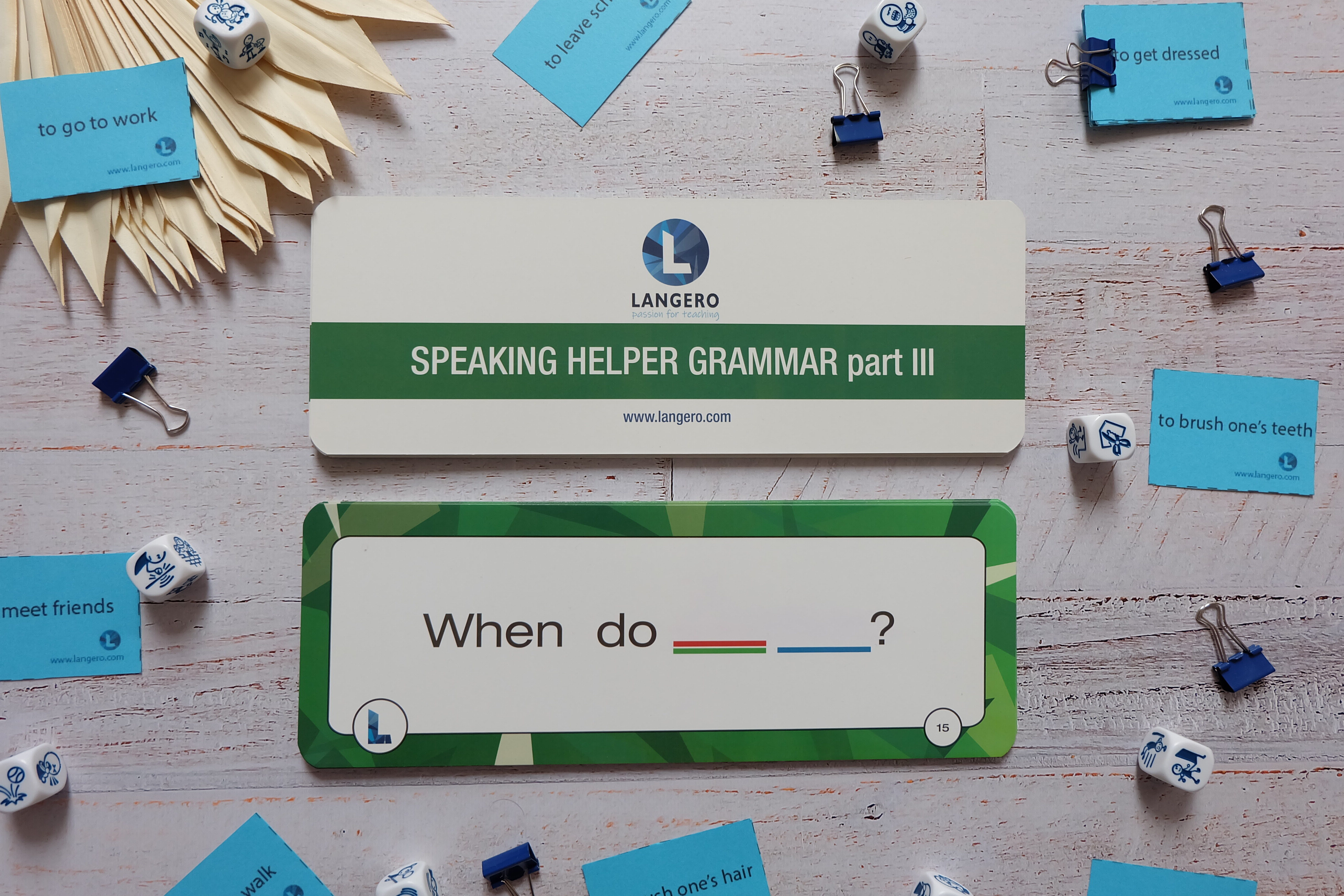
But there’s more! We encourage you to get acquainted with the videos presenting examples of Present Simple usage in English:
Let’s listen
My typical day:
My dad’s day:
My preferences:
My dad’s preferences:
After familiarizing yourself with our materials, you should know:
- how to describe your day and other people’s day,
- how to speak about preferences,
- how to describe nature laws, events,
- how to ask about timetables.